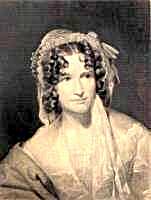
 Elizabeth Doten (b. 1829, d. 1913) was a "medium or speaker" who claimed to receive poems from invisible intelligences in the spiritual world.
In the prologue to Poems from the Inner Life (Boston: William White, 1864) Doten explains that "in the mysterious depths of the Inner Life, all souls can hold communion with those invisible beings who are our companions both in Time and Eternity." She makes no effort to persuade sceptics. When their souls sincerely hunger after revelation, she writes, they will seek and find it.
The author considers herself (and many others) predestined from birth to "catch the thrill of the innumerable voices resounding through the universe" and to translate their messages into human language despite a translator's own imperfections. Quite a number of the poems published in the book, she states, were written several years before her public appearance as a medium or speaker. They were mostly the fruit of the slow process of thought, she admits candidly, "yet for some of these, even, I can claim as direct and special an inspiration as for those delivered upon the platform."
One poem that convinced her about the reality of external inspiration was "Song of the North," received in April, 1853. This poem foresaw the tragic outcome of Sir John Franklin's expedition to find the Northwest Passage at a time when "strong hopes were entertained of the discovery of Franklin and his men, together with their safe return."
The first poem delivered to her by Poe arrived unexpectedly. "The influence of Poe was neither pleasant nor easy," she relates, "I can only describe it as a species of mental intoxication, I was tortured with a feeling of great restlessness and irritability, and strange, incongruous images crowded my brain." Some images were dazzling, others dark and repulsive. The experience of delivering a poem of his on the stage would leave her feeling "quite ill for several days."
The lengthy poem "Farewell To Earth," a fragment of which is reproduced below, purports to have been given under the influence of Edgar A. Poe. "It was given in the city of New York, Monday evening, Nov. 2, 1863." 1
Doten describes her own verbal relay on stage as "the faintest possible echo of that most musical and majestic lyric which thrilled the harp-strings of my being."
"Farewell To Earth" is Poe's final communication to humans, Doten maintains, and is also the culmination "in the higher life" of Poe's transformation into a hero, the victorious overcomer of "every barrier that impeded the free out-growth and manifestation of his diviner self."
"As he last appeared to me," she continues, "he was full of majesty and strength, self-poised and calm"; he had a radiant countenance and wore an olive wreath around his brow "whose leaves glowed like fire"; he stood on a mountainside "white and glittering like crystal."
One line of this poem also employs Paul's triad of faith, hope and love.
The verse is highlighted yellow.
Farewell To Earth. [Poe.]
Farewell! Farewell! |
| Supplement to Lenore: Answers To Some Questions On The Raven |